Designing Digital Products That Feel Fast
Users do not separate speed from experience. Performance shapes trust before content even loads.
14 min read
Web & App
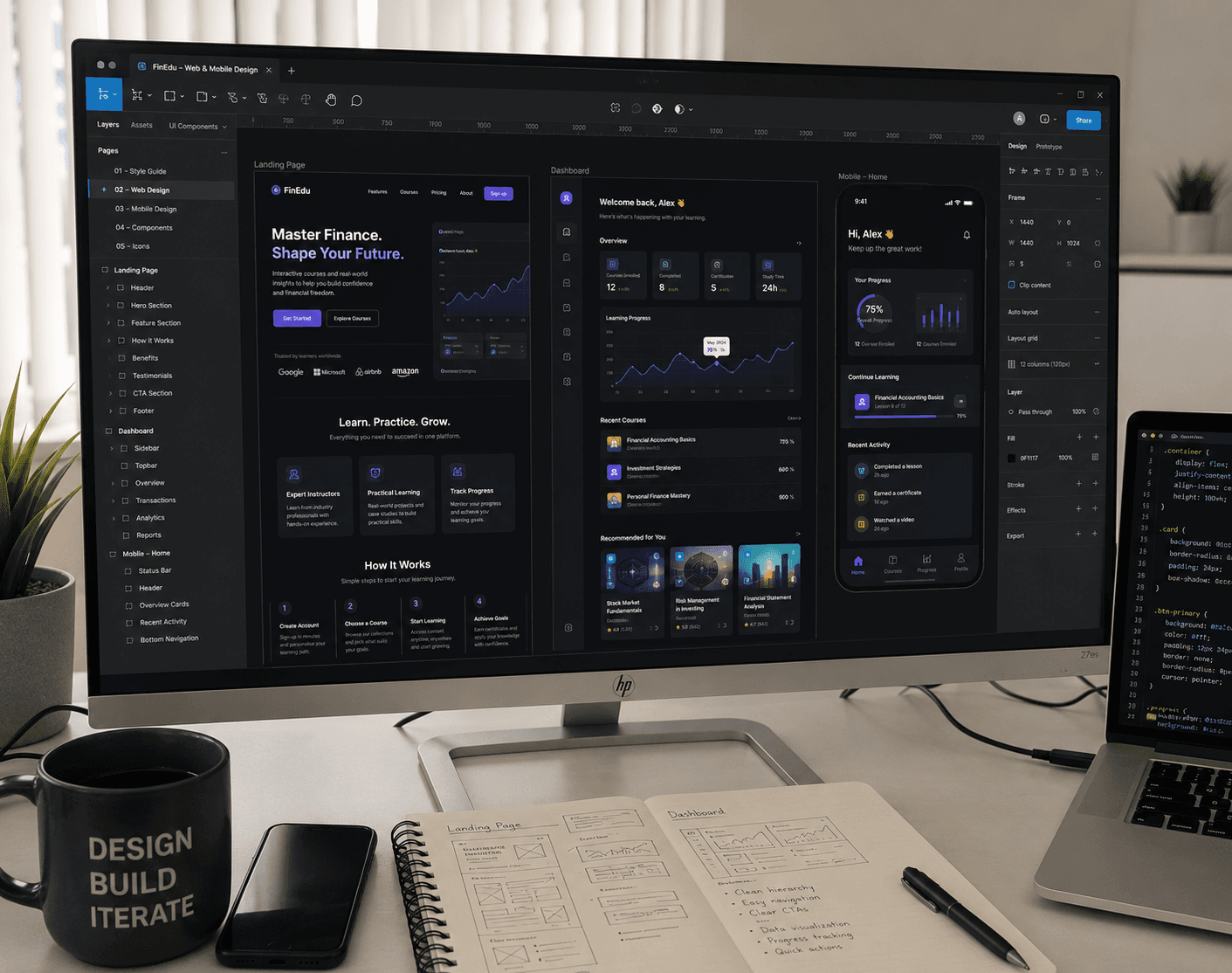
The First Impression Happens Before Interaction
People form opinions about digital products almost instantly.
Before a user reads a headline, explores a feature, or clicks a button, they experience responsiveness. Speed communicates reliability. Delay communicates friction.
Even small moments of lag create uncertainty. Interfaces begin to feel heavier, less polished, and less trustworthy.
A fast product does not just improve usability.
It changes perception.
Performance Is a Design Responsibility
Performance is often treated as a development concern handled near deployment. In reality, most performance decisions begin much earlier during design, structure, and content planning.
Heavy animations, oversized media, unnecessary scripts, and poorly planned CMS systems all shape how a product behaves long before it reaches production.
Good design is not only visual refinement.
It is operational efficiency.
What Fast Experiences Usually Have in Common
High-performing websites and applications tend to follow the same principles consistently:
Lightweight visual systems
Intentional motion and transitions
Clear information hierarchy
Responsive layouts across devices
Efficient asset and media handling
Structured CMS architecture
Reduced dependency overload
Performance rarely comes from one major decision.
It comes from hundreds of small intentional ones.
Simplicity Scales Better
The more complexity is added without purpose, the harder a product becomes to maintain.
Complex systems increase load times, introduce inconsistencies, and create fragile user experiences. Simplicity, when executed thoughtfully, creates flexibility and long-term scalability.
That does not mean minimal design always wins.
It means every component should justify its existence.
“Speed is not a feature added later. It is a reflection of how clearly the product was designed.”
Motion Should Support the Interface
Animation can improve usability when it guides attention, explains transitions, or creates continuity between interactions.
But excessive motion often becomes decorative noise.
The best digital experiences use movement carefully. They feel responsive without demanding the user's attention. Smoothness matters more than spectacle.
Users remember how effortless a product felt, not how many effects it contained.
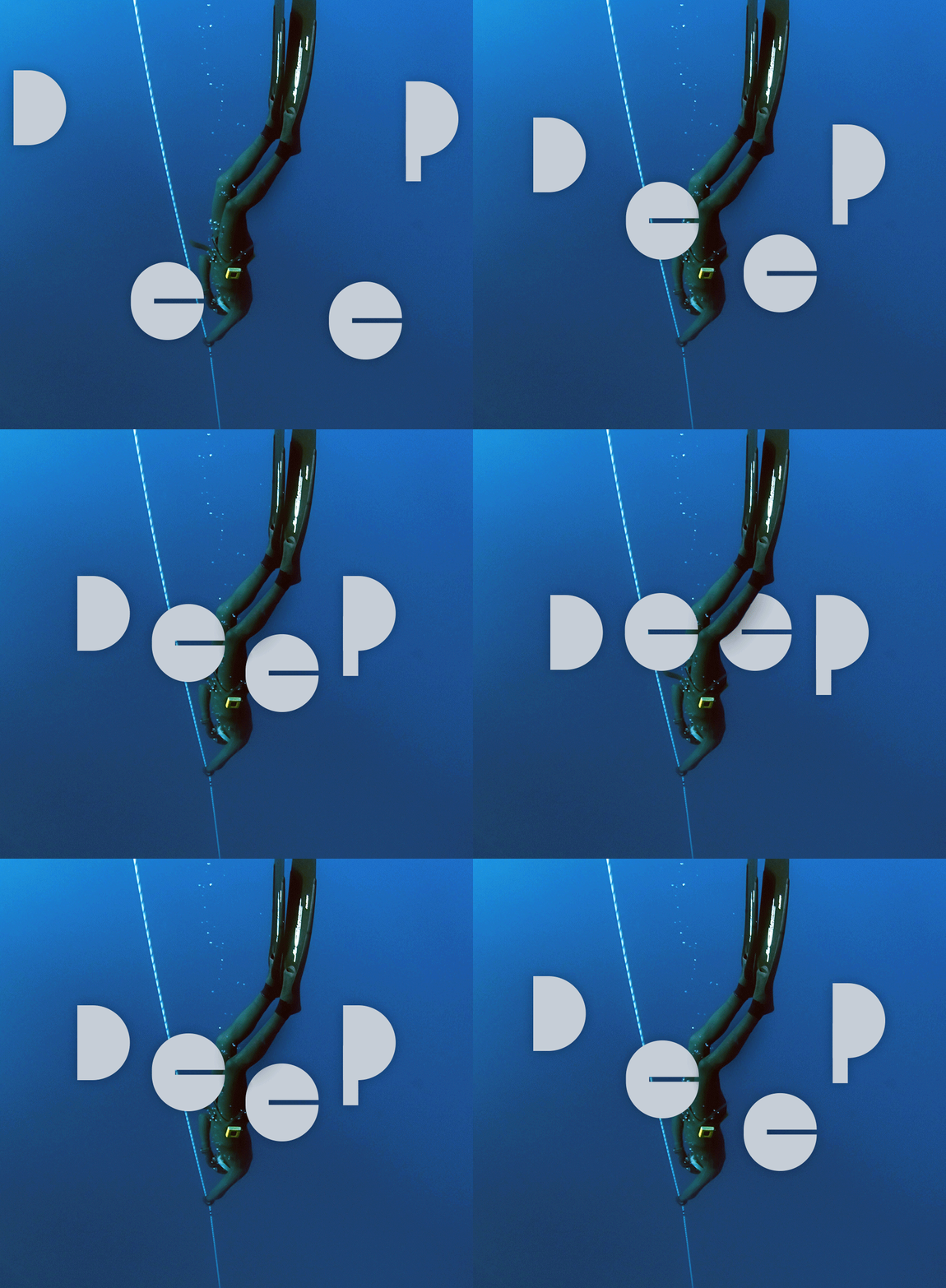
Mobile Experience Defines the Standard
Most users now experience products through mobile devices first.
That changes how performance should be approached entirely. Limited bandwidth, smaller screens, and inconsistent network conditions mean optimisation is no longer optional.
Designing for ideal desktop conditions alone creates experiences that fail silently for a large portion of users.
A modern product should feel reliable under imperfect conditions, not only perfect ones.
Tools Accelerate, Systems Sustain
Modern platforms and frameworks have dramatically reduced the barrier to building polished digital products. But tools alone do not guarantee quality.
Without structure, even advanced stacks become bloated over time.
Strong systems create consistency across design, development, and content operations. They reduce unnecessary decision-making and make scaling more sustainable.
Clear component systems reduce duplication
Design consistency improves maintainability
Structured workflows minimise technical debt
Performance monitoring prevents gradual degradation
Technology evolves quickly.
Operational discipline remains timeless.
Designing for Longevity
Many products launch looking impressive, but gradually lose performance as new features, scripts, integrations, and content layers accumulate.
Sustainable design considers what happens after launch.
Can the system grow without slowing down?
Can new pages maintain consistency?
Can teams update content efficiently without breaking structure?
Long-term product quality depends on how well the foundation was designed in the beginning.
“The fastest interfaces are usually the ones with the clearest decisions behind them.”
Experience Is the Product
Users rarely analyse why a digital product feels premium. They feel it.
Fast interactions, responsive feedback, stable layouts, and frictionless navigation combine into something larger than performance metrics. They create confidence.
A product that feels effortless encourages exploration.
A slow experience creates hesitation.
That difference directly shapes retention, perception, and trust.
The New Standard for Web & App Design
Modern digital products can no longer treat performance as an afterthought.
The strongest experiences are built by teams that understand design, engineering, and systems thinking as connected disciplines rather than separate phases.
Visual quality matters.
Branding matters.
Interactions matter.
But none of them reach their full potential if the experience itself feels slow.
Performance is no longer only technical optimisation.
It is part of the product identity itself.

